
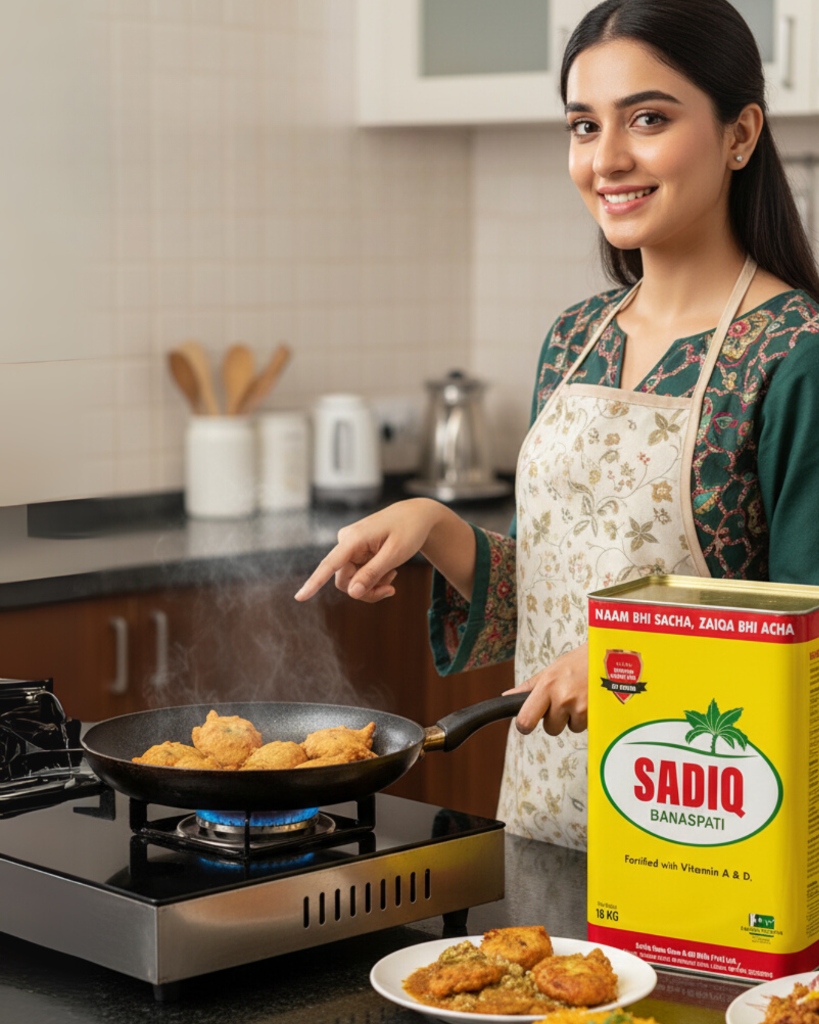
For generations, the distinct aroma of Banaspati ghee has been the heart of the South Asian kitchen. It’s the foundational ingredient that turns simple flour into decadent, multi-layered breads and transforms raw spices into rich, velvety gravies.
While liquid oils have their place, mastering Banaspati unlocks a level of traditional texture and flavor that is impossible to replicate otherwise. Here is how to harness its full culinary potential.
1. The Secret to Flaky Layers
The magic of Banaspati lies in its structure. Because it remains semi-solid at room temperature, it acts similarly to a baker's shortening. When you fold it into dough for samosas or lachha (layered) parathas, it creates distinct pockets of fat. As the dough hits the hot tawa or frying oil, these pockets melt and create steam, pushing the dough apart to form those coveted, crispy, shatter-in-your-mouth layers.
2. High-Heat Frying Stability
Much like the palm olein we discussed earlier, quality Banaspati is exceptionally resilient under high heat. It has a robust smoke point, meaning you can bring it to the optimal frying temperatures (170°C–190°C) without the fat breaking down or burning. This guarantees that your pakoras, jalebis, and fried snacks develop a gorgeous, golden-brown crust instantly, sealing the outside before the fat can seep into the food and make it greasy.
3. Blooming Spices (The Perfect Tadka)
The true depth of a daal or curry comes down to the bhagar or tadka—the technique of tempering spices in hot fat. Banaspati is a phenomenal carrier of flavor. When you drop cumin, dried chilies, or garlic into hot Banaspati, it extracts their essential oils instantly without scorching them, carrying that intense, roasted aroma evenly throughout the entire dish.
4. Texture and Mouthfeel
Liquid oils tend to leave a slick residue, but dishes cooked in Banaspati develop a richer, more luxurious mouthfeel. It slightly thickens the gravies of kormas and karahis, giving them a traditional, glossy finish that clings beautifully to your roti.
Mastering Banaspati isn't just about applying heat; it's about utilizing its structural properties to elevate the crunch of your frying and the depth of your curries, ensuring that the presentation is flawless.